Quick Summary
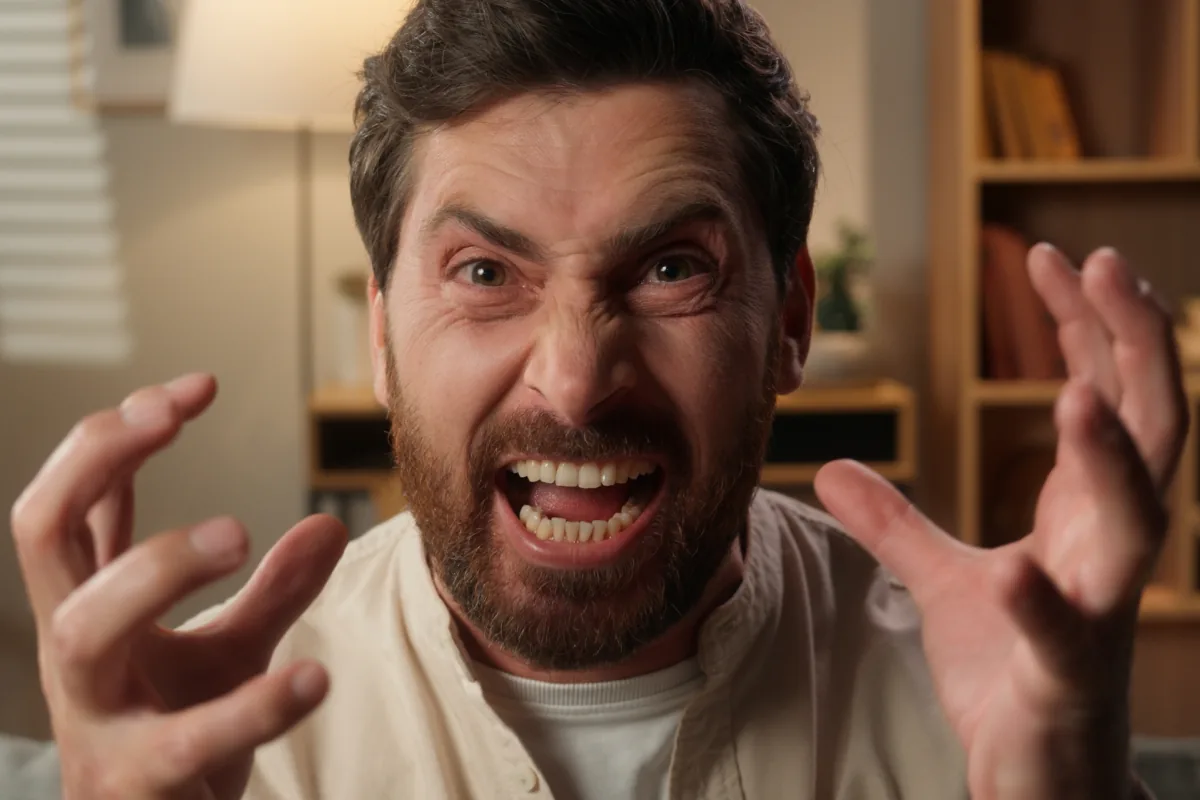
You hold it together all day, then blow up over a spilled cup or a kid’s third question in a row. That gap between your work self and your home self is not just stress or a bad temper. For a lot of men, disproportionate anger at home can be a trauma response the nervous system runs on autopilot, wired by something you may not even count as trauma. Post-traumatic stress disorder does not require combat or nightmares, and the short fuse often shows up exactly where you finally let your guard down. Trauma-focused therapy can target the root of that reaction.
-
Anger at home can be a nervous system stuck in threat mode.
-
Car crashes, a rough childhood, or loss can cause post-traumatic stress disorder.
-
High-functioning men often mask symptoms and dismiss their own experiences.
-
Trauma-focused therapy often targets the reaction anger management alone leaves untouched.
Why PTSD Anger Shows Up at Home and Not at Work
You handle everything at work fine, from the deadlines, difficult people, and a boss who changes his mind twice a day. Then you pull into the driveway, walk in, and forty seconds later you are snapping at your kid for leaving something in the hallway. The reaction is too big for the crime, and you know it while it is happening but cannot seem to stop it.
Your body spent the whole day scanning, managing, and keeping the lid on, so when the guard finally drops at home, everything you suppressed often comes out the wrong way. The people who love you become the ones who catch it, because they are the only ones you feel safe enough to lose it around.
A bad temper is fairly steady and roughly proportional. It can overshoot and leave you afterward feeling wrung out and confused about where that came from. A trauma-driven threat response tends to change that. If you have never connected your anger to anything deeper, it is worth looking into men’s mental health treatment built around exactly these patterns, because anger that doesn’t go away can signal something deeper.
You Don’t Have to Be a Combat Veteran to Have Post-Traumatic Stress Disorder
Most people associate post-traumatic stress disorder with soldiers returning from war. Because of this, you look at your own life and decide nothing as bad as that has happened to you, and do not address it further. But the National Center for PTSD is clear that PTSD can come from a wide range of events that don’t involve combat.
A wreck on the freeway that you walked away from without a scratch. A father who came home unpredictable, so you learned to read a room before you were ten. Getting jumped in a parking lot years ago. A medical scare, a surgery that went sideways, the phone call that told you someone was gone. A job that ran you into the ground while a manager humiliated you daily. Any of these can leave a mark on the nervous system that never fully got healed.
Men, especially high-functioning men, are good at talking themselves out of it, and as such keep their trauma untreated. You show up, you provide, you keep the machine moving, and nobody at the office would ever guess. The childhood trauma in men’s mental health treatment conversation exists because so many men never counted what happened to them as trauma at all.
Signs of PTSD Anger in Men: Short Fuse, Irritability, and Overreaction
You may notice you are always a little braced, scanning exits at a restaurant, jumpy when someone comes up behind you, unable to relax even on a quiet Sunday. Small things can set you off with a speed that surprises even you. The American Psychiatric Association lists irritability and angry outbursts among the symptoms of PTSD, along with ongoing anger and other changes in arousal, reactivity, mood, and cognition.
From the inside, all of this can feel like you being tired or stressed. Yet your family experiences a man who is walking around with a fuse that could burn away at any moment. The way it reads to them and the way it feels to you are two different stories about the same nervous system. How PTSD affects daily life is rarely dramatic, with a slow erosion of the ordinary moments that used to be easy.
At Into The Light, plenty of men come through the door looking for help with anger who would never have called themselves traumatized. They can describe the blowups at home in detail while insisting nothing very bad ever happened to them. It is often only after a careful conversation that an older event surfaces, and the irritability starts to make sense as the first thing the body jumped to do deal with it.
How Trauma-Focused Therapy Treats the Root of the Anger
Anger management has its place, but when trauma is at the root of it, anger management is often addressing the wrong layer too soon. You can learn every breathing technique and coping skill in the book and still find yourself detonating at the dinner table, because the trigger is really a nervous system got set off after reading a threat before your brain thought about it.
Trauma-focused therapy works further down. Instead of managing the outbursts after the fact, it goes at the stored experience that is driving them. Eye movement desensitization and reprocessing, or EMDR, is one approach that helps the brain reprocess a memory so it stops carrying the same connotations in your mind, making your overreactions often lose their fuel. Other trauma-focused talk therapies work toward a similar end from a different place. The goal is not to erase what happened but to take away the power you’ve given it.
This kind of work usually needs more room than a rushed weekly check-in allows, which is one reason why weekly sessions alone often aren’t enough for men carrying real trauma. Structured outpatient levels of care give you more contact and more consistency without pulling you out of your life. Some men also find they have been using a few drinks to take the edge off at night, which can quietly complicate things, and a good assessment will look at that too rather than treat it separately.
What PTSD Anger Treatment for Men Looks Like at Into The Light
At Into The Light, an assessment conversation walks through what is actually happening in your days: how you sleep, how you react, what the anger costs you at home, and what, if anything, from your past might still be running in the background.
From there, treatment is built around men who are still working, still showing up for their families, and do not want to disappear for a month to get help. Our men’s mental health outpatient care means you can do serious trauma-focused therapy while keeping your job and staying in your own bed, and stepping up to a more structured schedule when the situation calls for it. The aim is steady progress you can actually feel at home, where it matters, so the version of you that walks in the door at night is closer to the version you want your kids to remember.
If the pattern in this piece sounds like your last three months, you do not have to wait to do something about it. Talk with our admissions team about an assessment and find out what would actually help.
Sources
-
National Center for PTSD. “PTSD Basics.”
-
American Psychiatric Association. “What is Posttraumatic Stress Disorder (PTSD)?.”